
Retainers can protect momentum after launch, but they can also hide underused capacity, unclear escalation, and work that should have been included in the original build. This guide is for a website owner comparing post-launch agency support that is buying a retainer only when capacity, response times, reporting, and exclusions are clear. The goal is not to rank vendors by taste or presentation quality. The goal is to show what evidence a buyer should request before budget, timeline, and ownership become difficult to unwind.
The best fit is teams with recurring campaign pages, CMS edits, analytics checks, small design changes, or technical support needs. It is a weaker fit for teams that have just launched, do not know their recurring workload, and are being pushed into a vague monthly package. That boundary matters because website projects often fail in the gap between the sales conversation and the operating reality. A buyer should know what the site must do every month, who will edit it, which risks must be protected, and how support will be handled once launch attention fades.
How we judged the decision
We judged this web design retainer pricing checklist through a buyer due-diligence lens: discovery quality, ownership clarity, CMS or platform governance, content workload, accessibility, analytics, migration risk, and post-launch support. The scoring favours evidence that can be verified in a proposal, call, or handoff artifact. It does not reward vague claims about being strategic, conversion-focused, or full service unless the vendor can show how that promise becomes work.
Our editorial process is explained on the about page and in the editorial policy. We do not claim private access to agency delivery data or hands-on testing of closed client projects. The guidance is based on public platform documentation, procurement patterns, launch-risk controls, and the proposal evidence a buyer can reasonably request before signing.
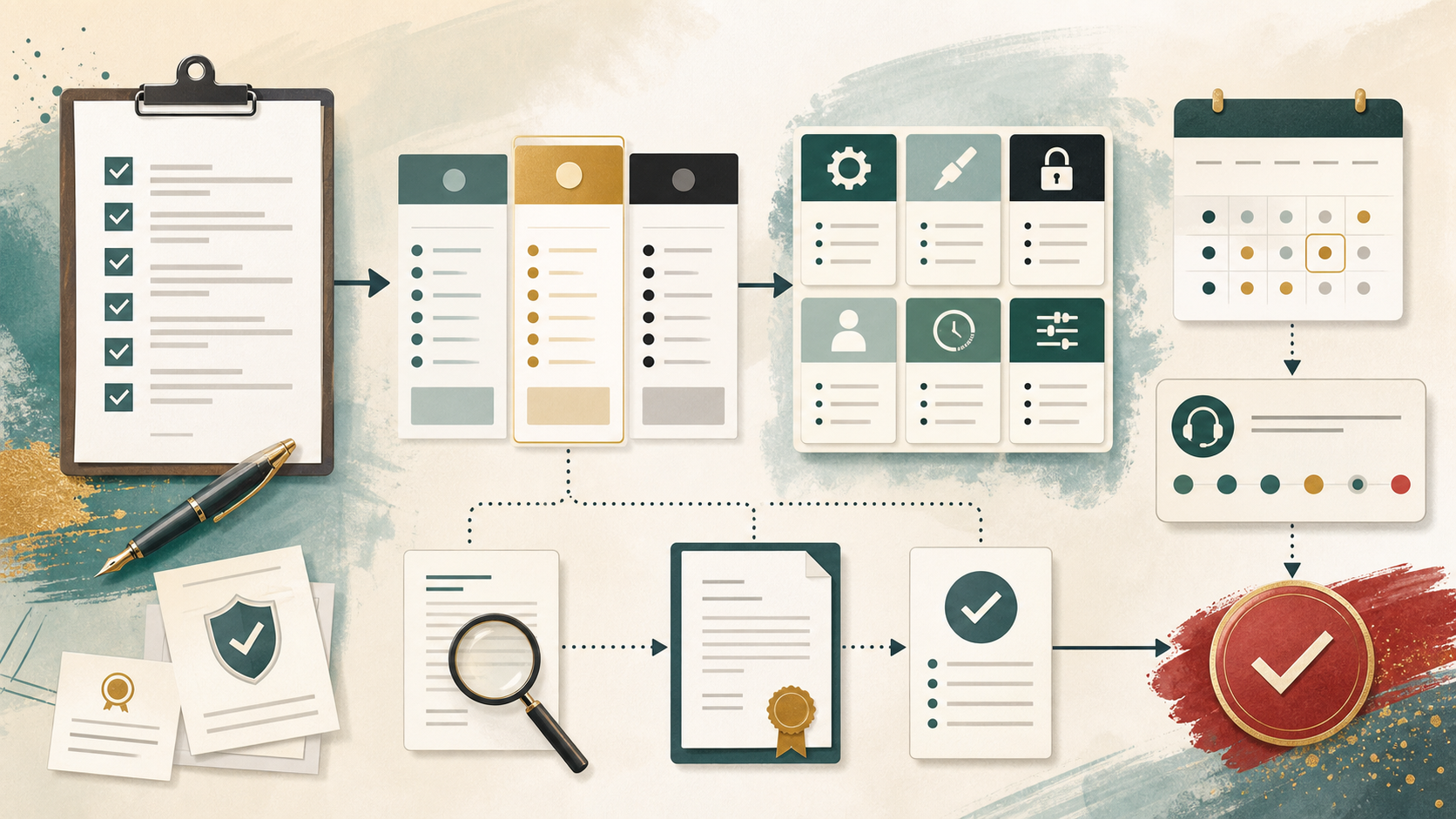
Decision snapshot
| Route | When it fits | Evidence to request |
|---|---|---|
| Stabilisation support | Best for the first 30 to 90 days after launch. | Ask what bug fixes, training questions, redirects, and analytics checks are covered. |
| Monthly production capacity | Best for marketing teams publishing regularly. | Ask how many tasks, hours, or deliverables are included. |
| Technical maintenance | Best for CMSs with updates, plugins, forms, or hosting dependencies. | Ask what is proactive, what is reactive, and what is excluded. |
| Growth optimisation retainer | Best only when measurement and backlog ownership are mature. | Ask for reporting, experiment rules, and decision cadence. |
The table is not meant to force every buyer into one route. It is a way to prevent the shortlist from becoming a beauty contest. A buyer can use it to ask each vendor what type of work it is actually strongest at, which risks it expects the buyer to own, and where the proposal stops. When those boundaries are visible, price becomes easier to interpret.
Buyer readiness checklist
Before comparing proposals, write down the current site's business role, the pages that generate value, the content your team edits most often, the integrations that must keep working, and the support you expect after launch. This is the baseline that lets you compare agencies or platforms against your reality rather than against a generic sales deck.
The strongest buyers also document constraints. These can include launch date, internal approval capacity, copywriting availability, brand assets, legal review, analytics access, CRM ownership, domain access, hosting control, and paid campaign dependencies. Constraints do not weaken the brief. They help a good vendor estimate honestly and expose weak assumptions early.
What a real deal looks like
A useful deal changes the economics of work you genuinely need. It might cap a launch support window, bundle a defined migration task, include a clear number of production hours, or reduce the cost of monitoring that your team cannot handle internally. It is less useful when the discount is attached to vague language such as ongoing optimisation, priority support, or peace of mind without task definitions.
Ask the vendor to translate the package into examples. What happens when a form stops sending leads? What happens when a content editor needs a new page layout? What happens when a plugin update breaks a template? What happens when analytics stops recording conversions? The answer should tell you whether the package creates operating value or simply gives the vendor recurring revenue.
The buyer should also separate urgent risk from ordinary improvement. Security, checkout, forms, and critical lead paths may justify immediate support. Minor design enhancements, campaign pages, and reporting improvements can usually wait until the team has a measured backlog. This distinction prevents the business from overbuying support before it knows the workload.

Scoring model to use in calls
| Scoring area | What good evidence looks like | What to reject |
|---|---|---|
| Retainer names the work and the response level | What good evidence looks like | What to reject |
| Reporting shows what was done and what changed | What good evidence looks like | What to reject |
| Urgent requests have an escalation path | What good evidence looks like | What to reject |
| Exclusions are clear enough to price future work | What good evidence looks like | What to reject |
Score each area separately before discussing overall preference. A vendor can be excellent at visual design and weak at migration. Another can be strong at CMS ownership but too light on conversion measurement. Separating the scores helps the team decide whether a weakness is acceptable, negotiable, or a reason to remove the option from the shortlist.
For each score, ask for one proof artifact. A proof artifact can be a sample document, a process screenshot described in a call, an anonymised checklist, a launch timeline, a support report, or a short explanation of who owns the task. If the vendor cannot provide proof, lower the confidence score rather than assuming the work will happen later.
Commercial and operating questions
Ask how discovery changes the final scope. If the quote is fixed before discovery, ask which assumptions are being made and what happens when those assumptions are wrong. A responsible vendor should be able to separate must-have delivery work from optional improvements, and it should be clear which changes become paid variations.
Ask who owns content. Many website projects slow down because copy, product data, images, approvals, or legal review arrive late. The proposal should state whether the agency writes, edits, migrates, loads, or simply designs around content. If your team owns content, the timeline should include that work honestly.
Ask how support begins. The first month after launch is different from long-term improvement. Stabilisation work covers fixes, redirects, analytics, forms, training questions, and small corrections. Ongoing support covers production capacity, maintenance, reporting, campaign work, or optimisation. Mixing the two creates budget confusion.
Red flags to challenge
- discounted retainer sold before support needs are known.
- SEO or optimisation promised without named tasks.
- unused capacity, urgent work, and exclusions left ambiguous.
A red flag does not always mean the vendor is unqualified. It means the buyer should pause and ask for detail before signing. Some risks can be solved with a clearer scope, a revised timeline, a support addendum, or a narrower project. The danger is accepting vague language because the presentation feels confident.
Migration, measurement, and accessibility
Every serious website decision should include a launch-risk conversation. If URLs change, redirects need owners. If forms change, submissions need testing. If tracking changes, analytics events need validation. If templates change, accessibility and responsive behaviour need review. These tasks are not glamorous, but they protect the value the new site is supposed to create.
Accessibility should be discussed as part of quality, not as a late compliance checkbox. The buyer does not need to become an accessibility specialist, but the proposal should explain how navigation, headings, contrast, form labels, keyboard access, and responsive layouts will be checked. A vendor that treats accessibility as optional is increasing future remediation risk.
Measurement should also be practical. Decide which conversions matter, which pages should be monitored, what baseline performance looks like, and who reviews results after launch. Without measurement ownership, the project can be declared successful because it shipped, even if it is harder to operate or weaker commercially.
Source notes and internal reading
For source context we cross-check official or standards-based references including Google Search Central SEO starter guide, W3C accessibility fundamentals, UK ICO GDPR guidance. These links are used for platform, search, accessibility, commerce, or compliance context; they are not treated as vendor endorsements.
Use this guide alongside maintenance package guide, website redesign RFP checklist, CMS handoff checklist, agency shortlist guide. Keeping the same vocabulary across shortlist, brief, migration, handoff, and support decisions makes the buying process less subjective and easier to defend internally.
Final recommendation
A useful retainer is a management tool, not a comfort blanket. Buy it when the included work maps to real recurring needs and the agency can show how requests, reporting, and escalation will work.
A practical next step is to turn this page into a one-page scorecard. Put the options across the top, score each evidence area, and write the unresolved questions underneath. Then ask vendors to close those gaps before final negotiation. The winning choice should be the one with the clearest fit, the fewest hidden operating risks, and the strongest evidence that your team can manage the site after launch.
Vendor interview script
Use the final call to test how the vendor thinks, not only what it has already written in the proposal. Start with this question: "Walk us through the first two weeks after signature and name every decision you need from us." A strong answer will separate discovery, content access, analytics access, technical credentials, stakeholder approval, and project cadence. A weak answer will jump straight to design presentation or repeat the proposal summary without naming dependencies.
Next ask: "What are the three most likely ways this web design retainer could go wrong?" This is a useful question because experienced partners can talk about failure modes without becoming defensive. For this decision, the risks usually sit around capacity, response times, reporting, exclusions, and escalation. The vendor should explain what it controls, what the buyer controls, and which early decisions reduce the chance of late cost or launch disruption.
Then ask: "Show us what handoff or reporting looks like before we sign." The artifact does not need to reveal another client's private data. It can be a sample checklist, a redacted report, a training outline, a component guide, a URL map, or a support ticket summary. The point is to see whether the vendor has an operating pattern, not just delivery confidence. If the answer is that documentation will be created later, ask what standard it will follow and when it becomes part of acceptance.
Finally ask: "Which parts of this proposal should we not buy from you?" Good vendors know where they are not the best fit. They may say copywriting, photography, paid media, custom engineering, legal review, or advanced SEO should be handled separately. That honesty is commercially useful. It prevents the buyer from bundling work into the wrong contract simply because it is convenient.
Acceptance criteria before final sign-off
Before approving the final contract or launch handoff, write acceptance criteria in plain language. For a website owner, acceptance should include proof that the team can handle monthly website support and campaign production without reopening the whole project. It should also include confirmation that access, analytics, forms, redirects, support, and documentation have owners. These criteria are not bureaucracy; they are how the buyer prevents soft promises from becoming unresolved operating work.
A practical acceptance checklist should include five items. First, the vendor has named what is included and excluded. Second, the buyer has provided or approved the content and access the timeline depends on. Third, the launch-risk tasks have owners and dates. Fourth, the team can perform the recurring post-launch tasks that justified the project. Fifth, support terms explain response time, escalation, and paid extras. If one of these items is missing, the project can still continue, but the risk should be visible in the decision record.
Quality bar for the final choice
The final choice should be explainable to someone who was not in the sales meetings. You should be able to say why the option fits, what evidence supports it, what tradeoffs remain, and what would trigger a change in scope. If the argument depends mostly on taste, confidence, or a discount deadline, the process is not finished. If it depends on evidence, ownership, and a clear operating model, the decision is much easier to defend.
FAQ note
The FAQ below is editorial guidance for procurement planning. Final pricing, service levels, platform capabilities, contract terms, and deliverables should be confirmed directly with shortlisted vendors before purchase.
Procurement worksheet
For this web design retainer pricing checklist, write a short answer for five prompts before approving the final proposal: what success means, who edits the site, which launch risks must be protected, what support is included, and which decision would make the project a poor fit. If the team cannot answer these prompts, the procurement process is not finished.